What Homeowners Should Know Before Filing a Claim
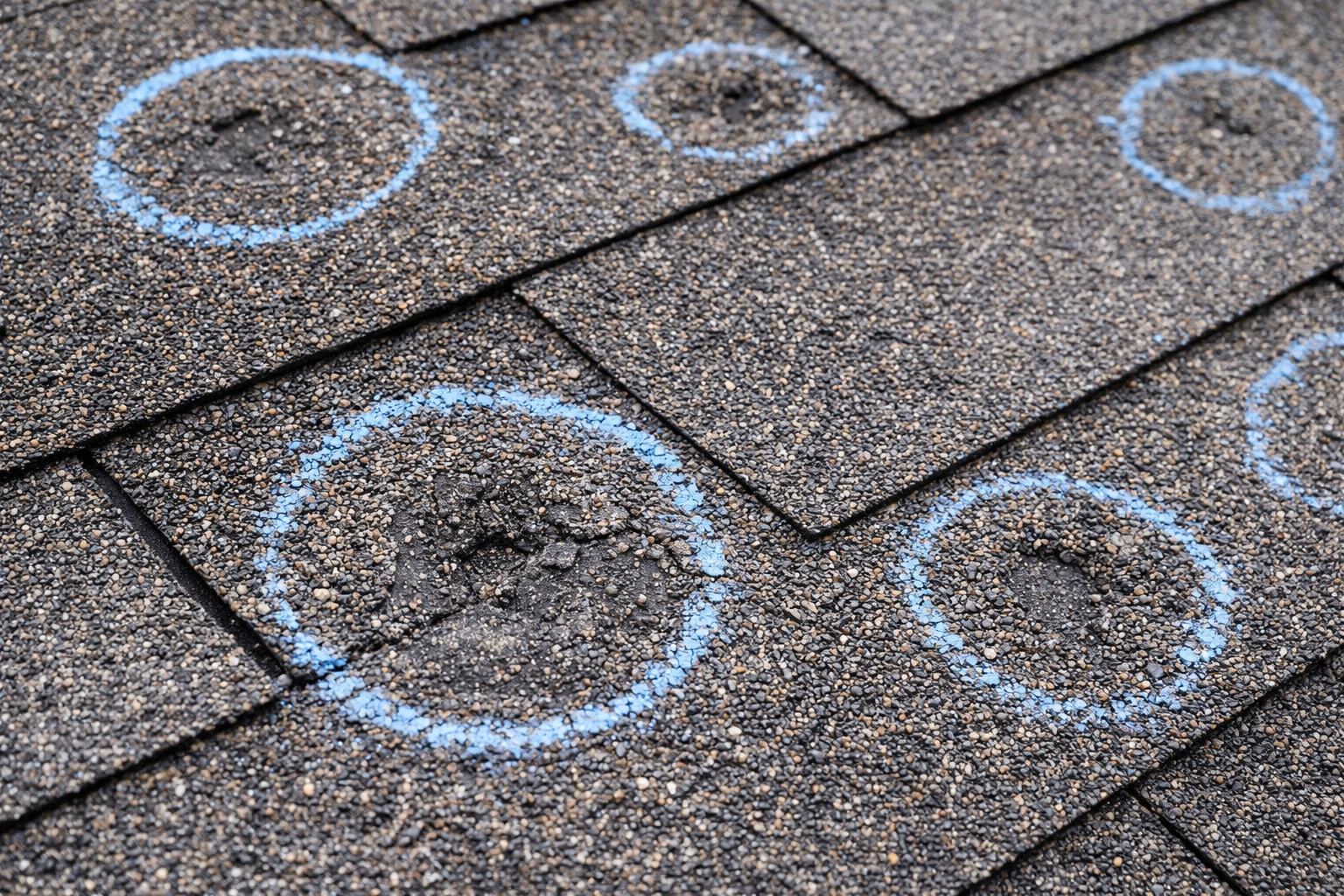
Hail damage isn’t always obvious. Many Oklahoma homeowners expect to see missing shingles, broken pieces, or water leaks before assuming a roof has been damaged — but that’s not how insurance adjusters evaluate hail impact.
In reality, trained adjusters look for specific physical indicators of functional damage, material compromise, and storm consistency across the roof system. Some damage is subtle and may not be visible from the ground, while other impacts may look dramatic but don’t actually affect performance.
Understanding how adjusters inspect hail damage helps homeowners:
- Know what legitimate damage looks like
- Avoid unnecessary claims
- Document storm impacts correctly
- Communicate more effectively during inspections
- Protect long-term roof performance
This guide explains how hail damage is evaluated on Oklahoma roofs and what factors influence claim decisions.
Why Oklahoma Roofs Are Frequently Inspected for Hail Damage
Oklahoma ranks among the most hail-impacted states in the country. Strong spring and summer storm systems regularly produce:
- Large hailstones
- High wind-driven impacts
- Repeated storm exposure within short timeframes
- Rapid temperature swings that accelerate material fatigue
Hail doesn’t just cause cosmetic marks — it can fracture asphalt mats, displace granules, bruise underlayment, weaken seal strips, and shorten roof lifespan.
Many roofs that “look fine” from the driveway still sustain hidden functional damage that only becomes apparent under close inspection.
What Adjusters Are Actually Looking For During a Hail Inspection
Insurance adjusters follow standardized inspection methods designed to determine whether hail impacts have compromised the roof’s ability to shed water and protect the structure.
1. Impact Consistency Across Slopes
Adjusters look for:
- Repeating impact patterns on multiple slopes
- Similar-sized marks aligned with storm direction
- Matching damage on soft metals (vents, flashing, gutters, ridge caps)
Random isolated marks may indicate mechanical damage rather than hail.
Storm consistency matters more than the size of any single mark.
2. Granule Loss and Mat Exposure
Asphalt shingles rely on granules to protect the fiberglass mat from UV exposure and moisture intrusion.
Adjusters evaluate:
- Fresh granule displacement
- Exposed asphalt mat or fiberglass
- Embedded granules driven into the shingle surface
- Granule loss patterns consistent with hail direction
Granule loss alone isn’t always claim-worthy — but when it exposes the mat or weakens water shedding, it becomes functional damage.
3. Bruising Beneath the Shingle Surface
One of the most important inspection steps is checking for bruise damage beneath the surface.
Adjusters may:
- Gently press suspected impact areas
- Look for soft spots or fractured mat layers
- Confirm internal compression damage that isn’t visible from above
Bruising compromises structural integrity and accelerates failure — even if the shingle still looks intact.
4. Cracked, Split, or Fractured Shingles
Some hail impacts create visible fractures:
- Radial cracking
- Edge splits
- Broken corners
- Seal strip separation
These defects directly affect water shedding and wind resistance and are usually considered functional damage.
5. Soft Metal Damage Correlation
Adjusters frequently use soft metals as confirmation points:
- Dented vent caps
- Damaged flashing
- Gutter impact marks
- Ridge vent deformation
Soft metal damage helps confirm hail size, direction, and intensity — supporting roof findings.
6. Age, Material Type, and Pre-Existing Wear
Insurance policies account for:
- Roof age and remaining lifespan
- Previous storm exposure
- Installation quality
- Material type (architectural vs 3-tab vs impact-resistant shingles)
- Prior repairs or deterioration
Hail damage must be storm-related, not normal aging or deferred maintenance.
Cosmetic vs Functional Hail Damage (Why Claims Get Denied)
Not all hail marks qualify for coverage.
Cosmetic damage:
- Surface scuffs
- Minor granule displacement without mat exposure
- Indentations that don’t affect waterproofing
Functional damage:
- Fractured shingle mat
- Water shedding compromised
- Seal strip failure
- Structural integrity reduced
Most insurance policies cover functional damage — not cosmetic appearance changes.
Related Blog:
Will Insurance Cover Roof Damage If Shingles Aren’t Missing?
How Homeowners Can Prepare for an Adjuster Inspection
If your area experienced a hail event:
✔️ Document the Storm
- Save weather alerts and hail reports
- Take photos of visible impacts on siding, gutters, fences, AC units, and vehicles
✔️ Avoid Walking the Roof Yourself
Improper foot traffic can cause damage that complicates claims.
✔️ Photograph Ground-Level Evidence
Look for:
- Dented gutters
- Downspout marks
- Shingle granules in downspouts
- Damaged patio furniture or window screens
✔️ Schedule a Professional Roof Evaluation (If Needed)
A qualified roofing professional can document legitimate storm-related damage and help you understand findings objectively.
Common Misconceptions About Hail Claims
“If shingles aren’t missing, there’s no damage.”
Not true — many functional failures occur beneath the surface.
“Every dent means replacement.”
Incorrect — cosmetic damage alone often doesn’t qualify.
“Adjusters only look for broken shingles.”
They assess material integrity, impact consistency, and water shedding performance.
“One bad spot means the whole roof is totaled.”
Damage thresholds vary by carrier and slope distribution.
When a Claim Makes Sense — And When It Doesn’t
A claim may make sense when:
- Functional damage is documented
- Multiple slopes show consistent impacts
- Mat fractures or seal failures exist
- Soft metal confirms storm intensity
A claim may not make sense when:
- Only cosmetic scuffs exist
- Damage is isolated and inconsistent
- Roof shows heavy age-related wear
- No functional compromise is present
Understanding this distinction helps homeowners avoid unnecessary claims and premium risk.
Related Guide:
Oklahoma Roof Insurance Claims Guide – What Homeowners Should Know
External Authority Reference
For technical impact resistance standards and testing methods:
This explains how roofing materials are tested for hail impact performance and classification.
Frequently Asked Questions
How big does hail need to be to damage a roof?
Damage depends on hail density, wind speed, roof age, and material type. Even smaller hail can cause bruising when driven by high winds.
Can hail damage show up months later?
Yes. Granule loss and mat fractures can accelerate aging and leaks over time.
Do adjusters always climb the roof?
Most do, but drone inspections and ladder assists are sometimes used depending on safety and access.
Will insurance pay for cosmetic dents?
Most policies exclude cosmetic-only damage unless specifically endorsed.
Should I get a second opinion if my claim is denied?
If you believe functional damage exists, a qualified independent inspection may help clarify findings.
Related Roofing Resources

Leave a Reply