Roofing Knowledge for Oklahoma Homeowners
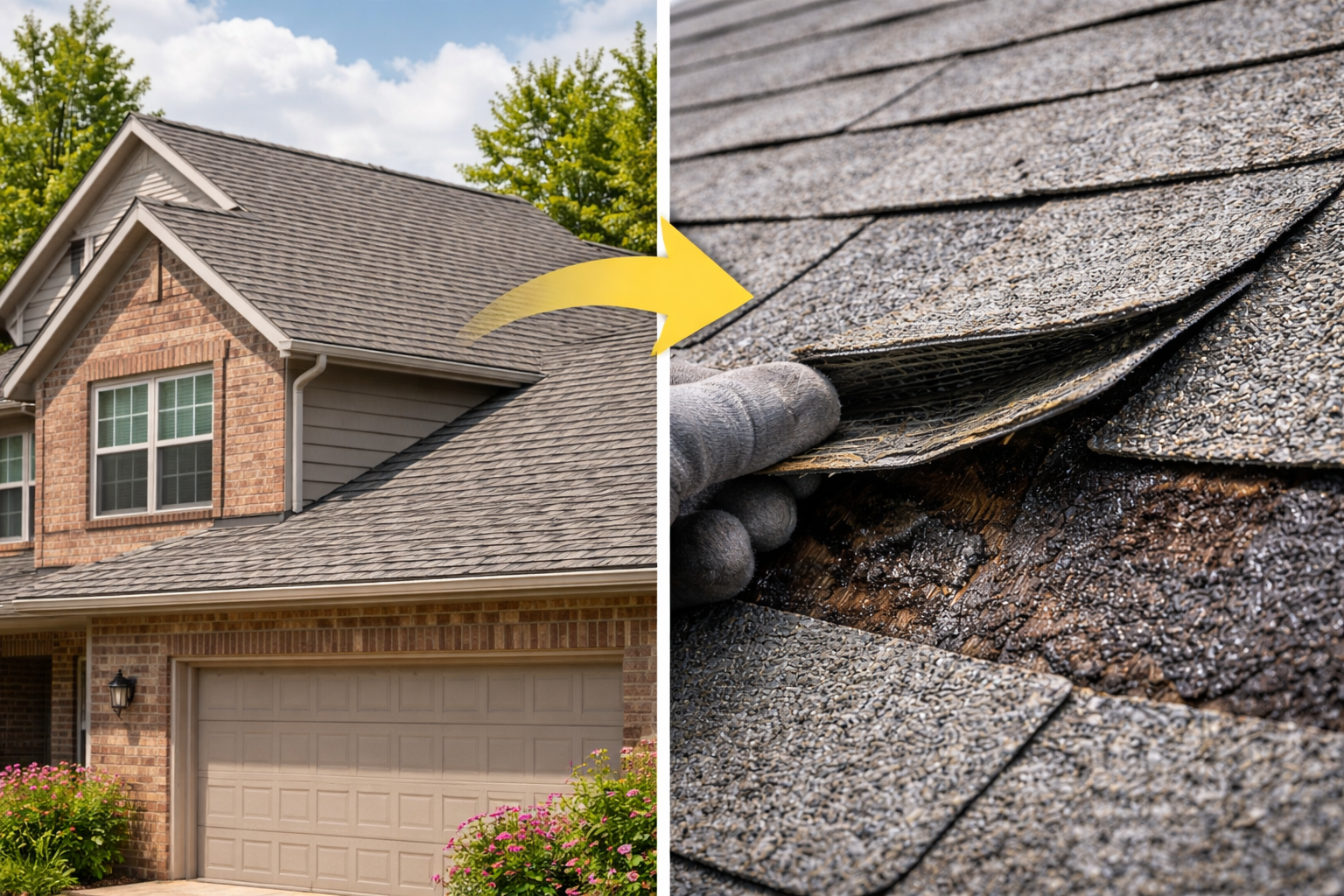
A Roof Can Look Perfect… and Still Be Failing
Here’s something many Oklahoma homeowners don’t realize until years later:
Some of the most serious roof damage never shows up on the shingles you can see.
After a hailstorm or high-wind event, roofs often settle back into place. Shingles lie flat again. No leaks appear. Everything looks fine from the driveway. But beneath the surface—at the seal strips, shingle mats, fasteners, and roof decking—damage may already be developing.
In Oklahoma’s climate, roofs often fail quietly first and visibly later.
If you’ve already learned how to inspect your roof safely from the ground, this guide explains the next layer of roofing knowledge—what those inspections can’t reveal, why hidden damage is common in Oklahoma, and how homeowners can make informed decisions without climbing onto their roof.
Quick Take: Hidden Roof Damage in Oklahoma
- Oklahoma storms often cause progressive roof damage, not immediate failure
- Hail and wind can weaken shingles without tearing them off
- Heat and UV exposure accelerate damage that looks like “normal aging”
- Many roof problems appear months after the storm, not right away
- Ground inspections are useful—but incomplete
This guide explains why that happens and what it means for Oklahoma homeowners.
Why Hidden Roof Damage Is So Common in Oklahoma
Roofs in Oklahoma are exposed to a combination of stresses that many regions rarely experience together.
Common statewide factors include:
- Frequent hailstorms in spring and early summer
- Strong straight-line winds and gust fronts
- Rapid temperature swings between day and night
- Prolonged heat and intense UV exposure
- Freeze–thaw cycles in fall and winter
According to the National Weather Service, Oklahoma consistently ranks among the most hail-impacted states in the country. Many of these storms don’t destroy roofs outright—they weaken them gradually, below the surface.
This is why understanding how roofs fail, not just how they look, is critical for Oklahoma homeowners.
What You Can See From the Ground — and What You Can’t

Ground-level inspections are a smart and safe first step, but they have clear limitations.
Typically Visible From the Ground
- Missing or torn shingles
- Large debris impact areas
- Obvious flashing displacement
- Noticeable sagging rooflines
Commonly Not Visible From the Ground
- Granule loss caused by hail impact
- Lifted or partially unsealed shingle edges
- Hairline fractures in shingle mats
- Bruising beneath intact shingles
- Early moisture intrusion at decking or underlayment
These hidden issues are often the true cause of future leaks, not the dramatic damage homeowners expect to see.
Hidden Hail Damage: More Than Just Dents
Hail damage in Oklahoma rarely looks catastrophic at first glance.
Hidden hail damage may include:
- Granule displacement that exposes asphalt to UV breakdown
- Soft impact bruising beneath intact shingles
- Accelerated aging that shortens roof lifespan
- Micro-fractures that worsen with heat expansion
Research from the Insurance Institute for Business & Home Safety shows that roofs can lose years of functional life without ever showing obvious visual damage.
This explains why a roof may “look fine” but still fail prematurely.
Independent testing by the Insurance Institute for Business & Home Safety shows that asphalt shingles can lose wind resistance and service life without obvious surface damage.
IBHS research on wind performance of asphalt shingles
Wind Damage That Appears Later — Not Immediately
Wind damage is one of the most misunderstood roof problems in Oklahoma.
High winds can:
- Lift shingle edges without tearing them off
- Break adhesive seal strips designed to prevent uplift
- Allow wind-driven rain beneath shingles
After the wind event, shingles often settle back into place, hiding the damage. Over time, repeated wind exposure worsens these weakened areas, increasing the risk of leaks or blow-offs during later storms.
Heat and Sun Damage That Mimics Normal Aging
Oklahoma’s heat and sun accelerate roof wear in ways that are easy to overlook.
Hidden heat-related damage includes:
- Brittle shingles that crack under minimal stress
- Loss of protective oils in asphalt shingles
- Shrinkage that exposes nail heads and fasteners
Because this damage develops gradually, homeowners often assume it’s normal aging—even when it occurs years earlier than expected.
Attic Signs That Can Indicate Hidden Roof Problems
Homeowners should avoid walking on roofs, but safe attic checks can sometimes reveal early warning signs.
Watch for:
- Dark staining or discoloration on roof decking
- Rusted nails or fasteners
- Soft or spongy wood surfaces
- Musty odors or elevated humidity
Guidance from OSU Extension notes that attic moisture indicators often appear before visible ceiling leaks, especially after storms.
Why Roof Problems Often Show Up Months After Oklahoma Storms

One of the most confusing aspects of roof damage is delayed failure.
Hidden damage can:
- Allow moisture intrusion without immediate leaks
- Weaken materials that fail during the next storm
- Reduce wind resistance over time
- Complicate insurance decisions due to delayed discovery
This delayed pattern is extremely common in Oklahoma and often leads homeowners to underestimate earlier storm damage.
Monitoring vs. Action: How Homeowners Should Think About It
Not every hidden issue requires immediate repair or replacement.
Monitoring May Be Appropriate When:
- No attic or interior moisture signs are present
- Shingles remain sealed and intact
- Damage appears limited and localized
Further Evaluation May Be Warranted When:
- Multiple storms occur in a short period
- Attic signs suggest moisture intrusion
- The roof is nearing the end of its expected lifespan
- Insurance timelines may apply
Education and documentation—not urgency—should guide decisions.
Safety and Educational Disclaimer
This guide is educational only and does not diagnose roof conditions or recommend specific repairs.
Homeowners should avoid walking on roofs due to fall risk and potential material damage.
Roof evaluations should be performed by qualified professionals using proper safety equipment.
Related Oklahoma Roofing Guides
This article is part of a structured, education-first system designed for Oklahoma homeowners:
- Roofing Knowledge: How Oklahoma roofs fail over time
- Home Guidance: How to inspect your roof safely from the ground
- Regions: How Oklahoma weather affects roofing systems
Understanding what can’t be seen is often more important than what can.

Leave a Reply