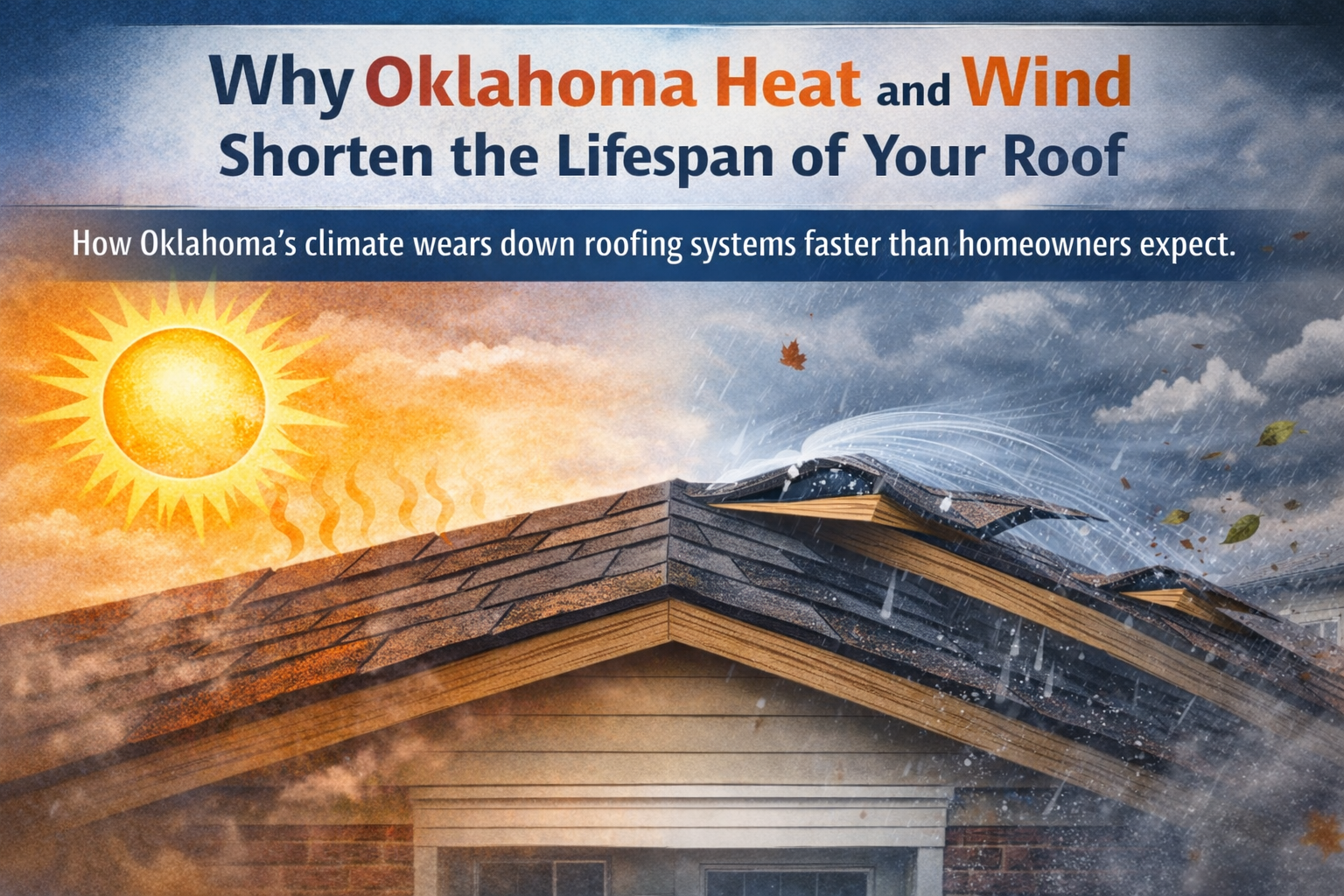
Understanding How Oklahoma’s Climate Wears Down Roofing Systems Faster Than Homeowners Expect
In Oklahoma, roofs age differently than they do in many other parts of the country. Homeowners often hear that asphalt shingles last “25 to 30 years,” but in reality, many roofs across Oklahoma City, Edmond, Norman, Moore, Yukon, and surrounding communities begin showing signs of wear much earlier.
The reason is simple: Oklahoma’s combination of extreme heat, strong winds, rapid weather swings, and severe storms places unusually high stress on roofing systems. Understanding how these forces work helps homeowners make better decisions about maintenance, repairs, and replacement timing.
This guide explains why Oklahoma roofs wear out faster — and what homeowners can do to extend their lifespan.
Oklahoma’s Climate Is Hard on Roofing Materials
Oklahoma sits in a unique weather corridor where southern heat meets plains wind and severe storm systems. Roofing materials must constantly expand, contract, flex, and resist uplift forces.
The primary environmental stressors include:
- Prolonged summer heat and UV exposure
- Frequent high winds and gust events
- Rapid temperature changes
- Hail and storm activity
- Seasonal moisture and humidity swings
Each of these factors accelerates aging differently, but together they create one of the most demanding roofing environments in the United States.
How Oklahoma Heat Damages Roofing Systems
Extreme Surface Temperatures
During Oklahoma summers, roof surface temperatures commonly exceed 140–160°F, even when air temperatures are in the mid-90s. Dark asphalt shingles absorb solar radiation and retain heat long after sunset.
This causes:
- Accelerated drying of asphalt oils
- Loss of flexibility in shingles
- Increased brittleness over time
- Faster granule loss
As shingles lose flexibility, they become more vulnerable to cracking during storms or wind events.
Thermal Expansion and Contraction
Roofs expand during the day and contract at night. In Oklahoma, where temperature swings can exceed 30–40 degrees within 24 hours, this movement is constant.
Over time this leads to:
- Nail loosening
- Sealant fatigue
- Small gaps forming at seams
- Increased susceptibility to wind uplift
Even properly installed roofs experience gradual mechanical fatigue.

Why Oklahoma Wind Is a Major Roof Killer
Many homeowners associate roof damage only with tornadoes or severe storms, but routine Oklahoma wind events are often the bigger long-term problem.
Wind Lift and Seal Fatigue
Modern shingles rely on adhesive seal strips to stay bonded together. Repeated wind movement slowly weakens these seals.
When seals weaken:
- Shingles begin to lift slightly
- Edges curl upward
- Wind gains access underneath
- Entire shingles can detach during future storms
This process often happens invisibly for years before obvious damage appears.
Granule Loss from Wind Abrasion
Wind carries dust, debris, and airborne particles that gradually wear away protective granules on shingles. These granules protect against UV damage.
Once granules are lost:
- UV exposure increases
- Asphalt dries faster
- Aging accelerates significantly
Homes in open areas or newer developments without mature tree cover often experience faster wear.
A Hidden Oklahoma Dynamic: Thermal Shock After Summer Storms
One roofing stress factor that many homeowners never hear about is thermal shock.
In Oklahoma, it’s common for extremely hot roofs to be suddenly cooled by rain from fast-moving summer storms. When cold rain hits shingles that have been baking in 150°F heat, materials contract rapidly.
This sudden temperature change can cause:
- Micro-fractures in aging shingles
- Seal strip separation
- Flashing movement around vents and chimneys
- Small openings that later develop into leaks
Homeowners often notice leaks after storms that produced little or no hail. In many cases, thermal shock combined with prior heat aging is the cause.
This dynamic is especially common in late summer when roofs have endured months of sustained heat.
The Oklahoma Heat + Wind Combination Effect
The real issue isn’t heat or wind alone — it’s how they interact.
Heat softens roofing materials during the day. Wind then flexes and moves softened shingles. When temperatures drop overnight, materials harden again in slightly altered positions.
This daily cycle causes:
- Micro-cracking
- Adhesive failure
- Faster structural fatigue
- Premature aging compared to manufacturer estimates
This is why a “30-year shingle” in Oklahoma may realistically perform closer to 15–20 years, depending on installation quality and exposure.
Additional Oklahoma Factors That Reduce Roof Life
Attic Ventilation Problems
Poor ventilation traps heat in attic spaces, raising shingle temperatures even higher. Many Oklahoma homes have undersized ventilation systems.
Storm Frequency
Even minor hail events weaken shingles without causing immediate leaks.
Sudden Cold Fronts
Oklahoma’s rapid weather changes increase stress on aging materials.
Signs Your Roof Is Aging Faster Than Expected
Homeowners should watch for:
- Excessive granules in gutters
- Curling or lifting shingle edges
- Brittle shingles during inspection
- Dark or inconsistent roof coloring
- Loose or missing shingles after moderate winds
These signs often appear years before leaks develop.
[Roof repair vs roof replacement in Oklahoma]
How Oklahoma Homeowners Can Extend Roof Lifespan
While climate can’t be controlled, maintenance and design choices make a major difference:
- Ensure proper attic ventilation
- Schedule inspections after major wind events
- Replace damaged shingles promptly
- Keep gutters clear to prevent moisture buildup
- Choose wind-rated and impact-resistant materials when replacing
[How to choose roofing materials for Oklahoma weather]
Final Thoughts: Oklahoma Roofs Age Differently
Manufacturer lifespan ratings are based on controlled testing environments. Oklahoma roofs operate in real-world conditions that include extreme heat, strong winds, and severe weather cycles.
Understanding this helps homeowners plan proactively instead of reacting to sudden failures.
At Oklahoma Roofing Authority, our goal is to help homeowners understand how roofing systems actually perform in Oklahoma’s environment, so decisions can be made based on long-term protection rather than marketing expectations.
FAQ: Oklahoma Heat, Wind, and Roof Lifespan
How long should an asphalt roof last in Oklahoma?
Most asphalt roofs last between 15–20 years depending on exposure, ventilation, and storm history.
Does wind damage always cause leaks right away?
No. Wind often weakens seals first, leading to problems months or years later.
Why does my roof leak after rain but not hail?
Rapid cooling of overheated shingles can cause thermal shock, opening small gaps in aging materials.
Does attic ventilation really matter?
Yes. Proper ventilation reduces heat buildup and slows shingle aging.

Leave a Reply