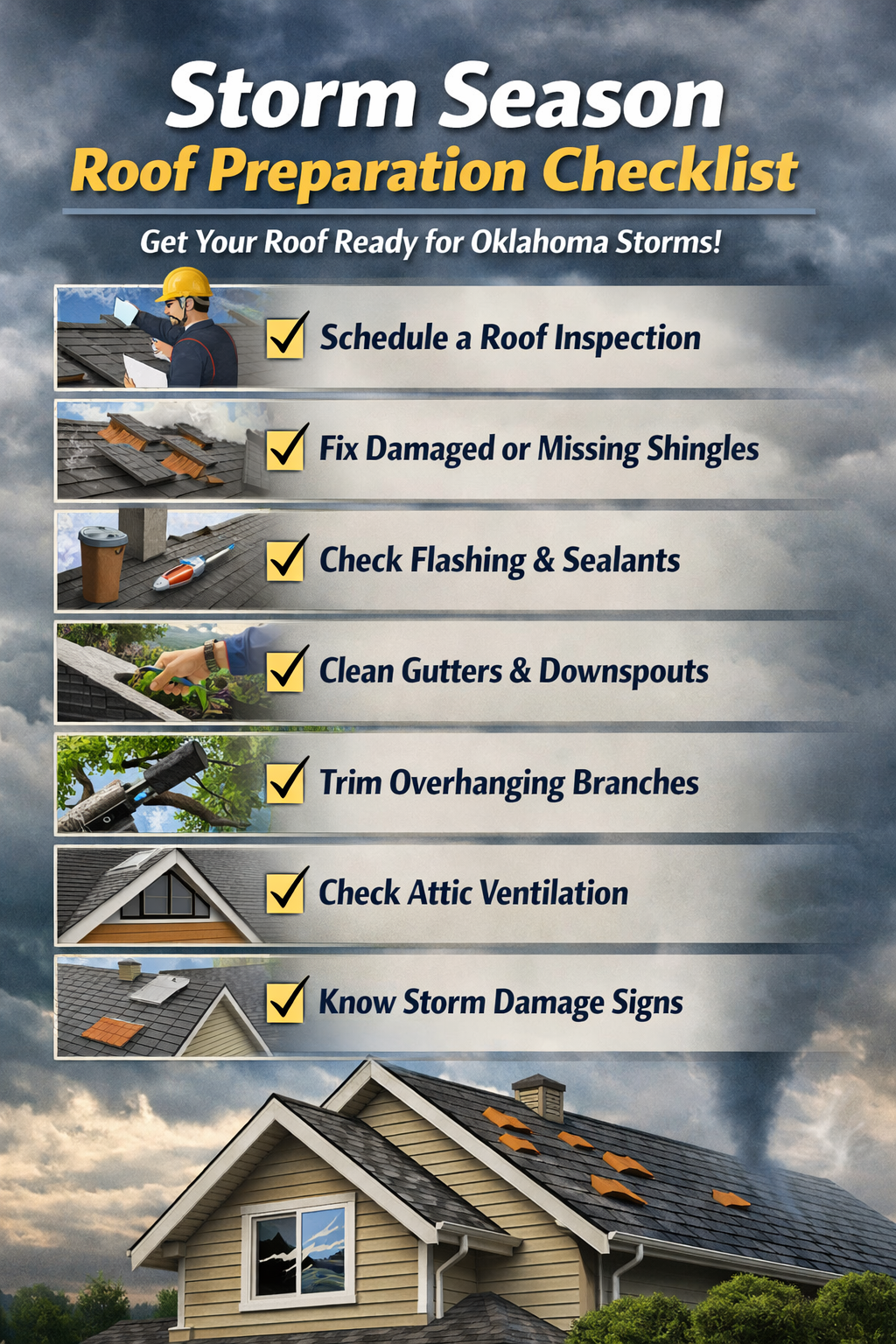
Storm season in Oklahoma can bring intense weather that puts every part of your home to the test—especially your roof. From damaging hailstorms to powerful straight-line winds, Oklahoma storms are capable of causing major roof damage in a matter of minutes.
Communities like Tulsa, Broken Arrow, and Oklahoma City regularly experience severe weather each year, making storm preparation essential for homeowners.
The good news is that a little preparation before storm season begins can help protect your roof, reduce the risk of damage, and prevent costly repairs.
In this guide, we’ll walk through the most important steps homeowners can take to prepare their roofs for Oklahoma’s storm season.
Why Oklahoma Storm Season Is Hard on Roofs
Oklahoma sits in a region known for frequent severe weather events. In fact, the state lies within Hail Alley, an area known for producing some of the most damaging hailstorms in North America.
Storm systems in this region often bring:
- large hailstones capable of cracking shingles
- strong winds exceeding 60 mph
- heavy rainfall that can exploit weak roofing areas
- flying debris that impacts roofs and siding
Even a well-built roof can suffer damage if small vulnerabilities already exist.
That’s why preparation before storm season is so important.
7 Ways to Prepare Your Roof for Oklahoma Storm Season
1. Schedule a Roof Inspection Before Storm Season
One of the most effective ways to prepare your roof for severe weather is scheduling a professional roof inspection.
A roofing professional can identify small issues that may become major problems during storms, such as:
- loose or lifted shingles
- damaged flashing
- small leaks
- weak sealing areas
Addressing these problems early strengthens your roof before severe weather arrives.
And if a storm does pass through your area, it’s important to know the right time to check your roof again. Homeowners can learn more in our guide on When you should inspect your roof after a storm.
2. Repair or Replace Damaged Shingles
Shingles act as your roof’s first layer of defense against wind and rain. When shingles become damaged or loose, they create entry points for water.
Signs that shingles may need attention include:
- curling edges
- cracks or missing pieces
- granule loss
- lifted shingles
During Oklahoma windstorms, weak shingles can easily be torn away, exposing the roof decking underneath.
Making repairs before storm season greatly reduces the risk of leaks.
3. Check Roof Flashing and Sealants
Flashing protects vulnerable areas of your roof where water is most likely to enter.
Common flashing areas include:
- chimneys
- skylights
- roof vents
- valleys
If flashing becomes loose or deteriorated, wind-driven rain can seep underneath roofing materials and into the attic.
A quick inspection before storm season can help ensure these areas remain sealed and secure.
4. Clean Gutters and Downspouts
Heavy rain is common during storm season in Oklahoma, and clogged gutters can cause water to back up under roofing materials.
When gutters are blocked by debris, water may:
- pool along the roof edge
- damage fascia boards
- seep under shingles
- increase the risk of leaks
Cleaning your gutters before storm season ensures rainwater flows safely away from your home.
5. Trim Trees Near Your Roof
Tree branches hanging over your roof can become dangerous during high winds.
Strong gusts can break limbs and send them crashing onto your roof, causing damage to shingles, gutters, and flashing.
Homeowners in areas like Norman and older neighborhoods around Tulsa often have mature trees that should be trimmed before severe weather arrives.
Keeping branches trimmed back reduces the risk of storm-related roof damage.
6. Check Your Attic Ventilation
Proper attic ventilation helps your roof handle temperature changes and moisture buildup more effectively.
Poor ventilation can lead to:
- trapped heat that weakens shingles
- moisture buildup that damages roofing materials
- reduced roof lifespan
Ensuring vents are clear and airflow is adequate helps keep your roof in better condition when severe weather hits.
7. Know the Signs of Storm Damage
Even with preparation, storms can still cause damage. After a severe storm passes through Oklahoma, homeowners should inspect their property for warning signs.
Common indicators of storm damage include:
- dented gutters or vents
- shingles on the ground
- granules collecting in gutters
- water stains inside the home
These signs often indicate hail or wind damage that should be inspected by a roofing professional.
To learn more about how storms affect roofing systems, visit our page on storm, wind, and hail roof damage.
(Internal link example: /storm-wind-hail-roof-damage)

What to Do After a Major Storm
If a strong storm passes through your area, taking quick action can help prevent further damage.
Homeowners should:
- Visually inspect the exterior of the home
- Look for debris or missing shingles
- Check ceilings for water stains
- Schedule a professional roof inspection if damage is suspected
Even minor hail impacts can weaken shingles and lead to leaks later, so it’s best to address issues early.
Final Thoughts
Storm season is a regular part of life in Oklahoma, but preparing your roof before severe weather arrives can make a major difference.
By scheduling inspections, making small repairs, cleaning gutters, and trimming trees, homeowners can reduce the risk of serious roof damage and extend the life of their roofing system.
Taking a proactive approach today can help protect your home when the next storm rolls through.
Leave a Reply