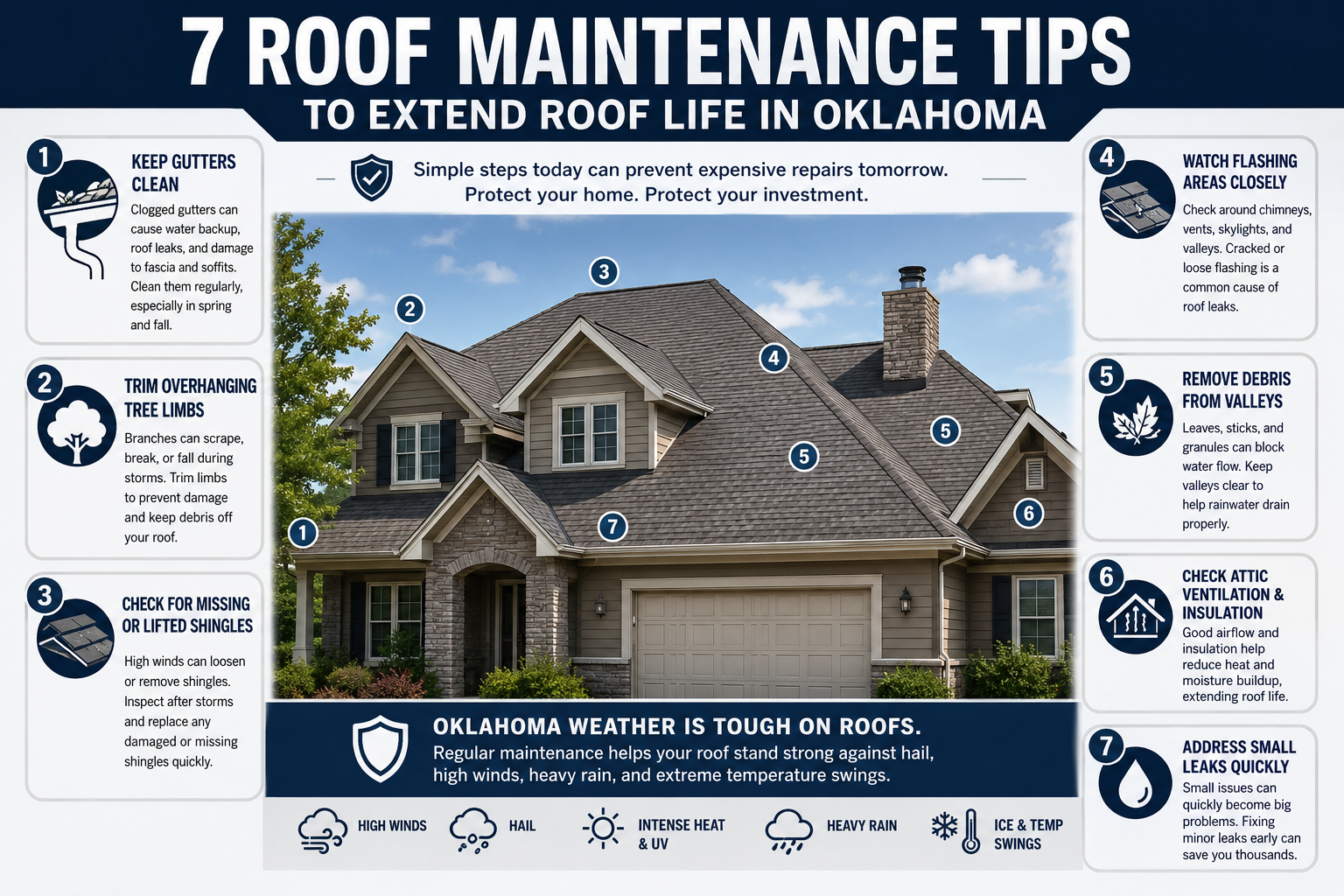
Oklahoma roofs go through a lot. Between high winds, hail, heavy rain, intense summer heat, and rapid temperature swings, even a newer roof can develop wear faster than many homeowners expect.
The good news is that small maintenance steps can make a major difference in how long your roof lasts. Staying proactive can help reduce leaks, prevent structural damage, and extend the life of your roofing system for years.
Different roofing systems also respond differently to Oklahoma weather, which is why understanding your options matters from the start.
Why Roof Maintenance Matters More in Oklahoma
In many parts of the country, roofs deal with one major weather threat. In Oklahoma, roofs deal with almost all of them.
Strong spring storms, large hail, high winds, UV exposure, ice, heat expansion, and heavy rain can all slowly weaken roofing materials over time. Even a small issue like a lifted shingle or cracked seal can quickly turn into a leak during the next storm season.
Routine maintenance helps catch those small issues before they become expensive repairs.
1. Keep Gutters and Downspouts Clean
Clogged gutters are one of the most common causes of preventable roof damage.
When water cannot properly drain off the roof, it can back up underneath shingles, overflow near fascia boards, or pool around valleys and flashing areas. Oklahoma storms can dump large amounts of rain quickly, making proper drainage especially important.
Leaves, sticks, seed pods, and storm debris should be removed regularly, especially during the fall and spring seasons.

2. Trim Overhanging Tree Limbs
Tree limbs hanging over the roof can shorten roof life in several ways.
Branches can scrape shingles during Oklahoma windstorms, drop debris into valleys and gutters, and create shaded areas that hold moisture longer. During severe weather, weak limbs can also break and cause major roof damage.
Keeping limbs trimmed back helps reduce wear while also lowering the risk of storm-related impact damage.
3. Check for Missing or Lifted Shingles After Storms
High winds are common across Oklahoma, especially during spring storm season.
Even if a roof looks fine from the ground, wind can loosen shingles, lift edges, or damage ridge caps. Small wind damage often becomes worse over time as water and additional wind exposure work underneath the roofing system.
After major storms, it is a good idea to visually inspect the roof from the ground for:
- missing shingles
- lifted shingle edges
- exposed nails
- fallen roofing material
- debris accumulation

4. Watch Flashing Areas Closely
Roof flashing protects some of the most vulnerable areas of the roof.
This includes:
- chimneys
- roof vents
- valleys
- skylights
- wall transitions
In Oklahoma, flashing often takes heavy abuse from wind-driven rain and thermal expansion caused by extreme heat changes. Over time, sealants can crack or separate, allowing water intrusion to develop.
Many roof leaks actually begin around flashing rather than the shingles themselves.
5. Remove Debris From Roof Valleys
Roof valleys handle large amounts of water during storms.
When leaves, sticks, or roofing granules build up in these areas, water flow can slow down and create moisture problems beneath the shingles. Oklahoma’s heavy spring rains can quickly expose these weak points.
Keeping valleys clear helps water drain properly and reduces unnecessary wear on the roofing system.
6. Check Attic Ventilation and Insulation
A roof’s lifespan is not only affected by weather outside the home. Conditions inside the attic matter too.
Poor attic ventilation can trap heat and moisture, especially during Oklahoma summers. Excessive attic heat can prematurely age shingles, while trapped moisture may contribute to mold, wood rot, or decking deterioration.
Proper airflow and insulation help regulate attic temperatures and reduce stress on roofing materials year-round.
7. Address Small Leaks Quickly
One of the biggest mistakes homeowners make is waiting too long to address a minor roof issue.
A small water stain, drip, or soft spot may seem minor at first, but Oklahoma storms can rapidly worsen existing damage. Moisture intrusion can spread into insulation, decking, drywall, and framing if left unresolved.
Catching issues early is usually far less expensive than waiting for major interior damage to appear.
Signs Your Roof May Need Attention
Homeowners should watch for warning signs such as:
- water stains on ceilings
- missing shingles
- granule buildup in gutters
- sagging areas
- exposed flashing
- musty attic odors
- increased energy bills
- visible storm damage
Even newer roofs can develop issues after repeated Oklahoma storm seasons.
Oklahoma Weather Can Accelerate Roof Wear
Oklahoma roofs experience some of the harshest weather swings in the country.
A roof may go from freezing temperatures to intense heat within days. Add hail, high winds, and strong UV exposure, and roofing materials naturally expand, contract, and wear over time.
That does not always mean a roof needs replacement. In many cases, proper maintenance and early repairs can significantly extend the life of the roofing system.
Final Thoughts
Roof maintenance may not seem urgent when everything looks fine from the ground, but preventative care can make a major difference over time.
Simple steps like cleaning gutters, checking for storm damage, monitoring flashing, and addressing small issues early can help Oklahoma homeowners protect their investment and avoid more serious repairs later.
If your roof has already been through several Oklahoma storm seasons, you may also be wondering whether stronger roofing materials could help reduce future damage.
Leave a Reply