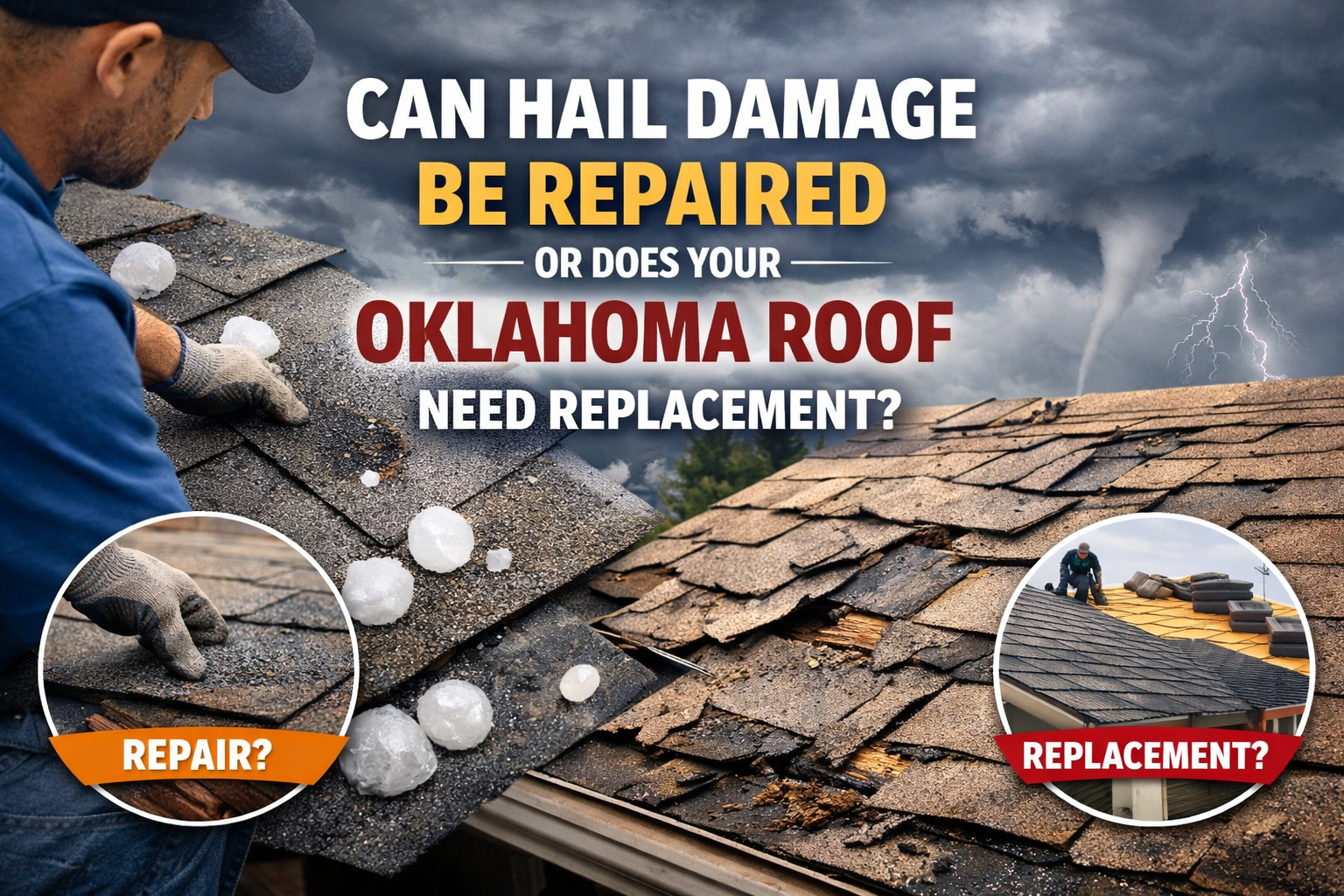
Oklahoma sees more hailstorms than almost any other state in the country. From Oklahoma City and Edmond to Norman, Moore, Yukon, Tulsa, and Broken Arrow, homeowners regularly face the same question after a storm:
Can this hail damage be repaired — or does the roof need to be replaced?
The answer depends on the type of damage, the roofing material, the age of the roof, how widespread the impacts are, and whether the damage compromises the roof’s ability to protect the home long-term.
This guide explains how hail actually damages roofs in Oklahoma, when repair is appropriate, when replacement is the smarter investment, and how to avoid costly mistakes after a storm.
Why Hail Damage Is Such a Big Issue in Oklahoma
Oklahoma sits directly in “Hail Alley.” Strong spring and early summer storm systems regularly produce hailstones ranging from pea-size to golf-ball size — and sometimes larger. These storms often arrive with:
• High wind speeds that increase impact force
• Rapid temperature changes that weaken shingles
• Heavy rain that exposes compromised sealant
• Repeated storm cycles within a single season
Even when shingles are not missing or visibly broken, hail can still cause hidden damage that shortens roof lifespan and increases leak risk months or years later.
Many Oklahoma homeowners assume their roof is “fine” because it looks normal from the ground — only to discover problems during the next heavy rain or insurance inspection.
What Hail Actually Does to Roofing Materials
Hail damage is not always dramatic or obvious. It often shows up in subtle ways that affect how the roof sheds water, seals itself, and resists future storms.
Asphalt Shingle Damage
Common in most Oklahoma neighborhoods.
Hail can cause:
• Bruising of the shingle mat (hidden fractures)
• Granule loss that exposes asphalt to UV damage
• Cracked or displaced seal strips
• Soft spots that weaken structural integrity
• Accelerated aging and brittleness
Even small hail impacts can shorten the roof’s remaining lifespan by years.
Metal Roofing Damage
Common on rural homes, shops, and modern builds.
Hail may cause:
• Cosmetic denting
• Panel deformation
• Fastener loosening
• Seam separation on standing seam roofs
While many metal roofs remain watertight after hail, severe impacts can compromise panels and coatings.
Tile or Specialty Roofing
Less common but highly vulnerable.
Hail can:
• Crack or fracture tiles
• Dislodge fastening systems
• Create moisture entry pathways
• Cause delayed breakage after thermal cycling
When Hail Damage Can Be Repaired
Not every hailstorm requires a full roof replacement. Repair may be appropriate when damage is localized, limited in scope, and the roof is otherwise healthy.
Repair may make sense if:
• Only a small section of shingles or panels are affected
• No widespread granule loss is present
• The roof is relatively new and structurally sound
• No underlying decking or moisture damage exists
• The damaged area can be properly matched and sealed
• The roof still has strong remaining service life
Typical hail repairs include:
• Replacing individual damaged shingles
• Sealing lifted or cracked tabs
• Replacing damaged flashing or vents
• Tightening or resealing fasteners
• Spot panel replacement on metal roofs
A professional inspection is critical. Surface damage may appear minor but hide bruising or compromised sealant beneath.
For homeowners considering this route, your Roof Repair Guide explains what quality repairs should include, what materials matter, and how to avoid temporary patchwork fixes.
When Hail Damage Requires Full Roof Replacement
Replacement becomes the better option when hail damage affects the roof’s overall performance, lifespan, or insurance eligibility.
Replacement is often recommended when:
• Damage is spread across multiple roof slopes
• Granule loss is widespread
• Shingles show mat fractures or softness
• The roof is near the end of its service life
• Repairs would exceed 30–40% of replacement cost
• Insurance coverage supports replacement
• Repeated storms have layered damage over time
• Matching materials are no longer available
• Structural or decking moisture is detected
In Oklahoma, many roofs receive multiple hail impacts over a few years. Cumulative damage often weakens shingles even if each storm seems minor individually.
A full replacement restores:
• Waterproof integrity
• Wind resistance
• Energy efficiency
• Manufacturer warranty coverage
• Insurance compliance
• Property value
If replacement becomes necessary, your Roof Replacement Guide walks homeowners through material choices, timelines, contractor selection, and long-term value considerations.
How Insurance Affects Repair vs Replacement Decisions in Oklahoma
Insurance often plays a major role in determining the best path forward.
Important considerations include:
• Whether your policy covers cosmetic damage
• Replacement cost vs actual cash value policies
• Deductible amounts
• Age and depreciation of the roof
• Matching requirements
• Carrier inspection standards
• Documentation quality
Some insurance carriers approve partial repairs, while others require full replacement if damage exceeds certain thresholds or affects multiple slopes.
A professional hail inspection with proper documentation improves claim accuracy and reduces disputes.
For a deeper understanding of hail identification and documentation standards, visit your Hail Damage Guide which explains how damage is evaluated and what adjusters look for in Oklahoma storms.
The Hidden Risk of Delaying Hail Repairs or Replacement
Delaying action after hail damage increases long-term risk.
Potential consequences include:
• Slow leaks that rot decking and framing
• Mold growth inside attic insulation
• Reduced wind resistance during future storms
• Voided manufacturer warranties
• Denied insurance claims due to delayed reporting
• Higher eventual repair costs
Many Oklahoma homeowners only discover hail damage after secondary problems appear — which often increases repair complexity and expense.

How to Know Which Option Is Right for Your Roof
The correct decision is rarely made from the ground or with a quick glance.
A proper evaluation should include:
• Close-up shingle inspection
• Soft spot testing
• Granule loss measurement
• Flashing and penetration review
• Attic moisture inspection
• Documentation photography
• Storm history review
• Roof age and material assessment
Avoid relying solely on visual appearance. Some of the most serious hail damage occurs beneath the surface.
Oklahoma Climate Makes the Decision More Important
Oklahoma roofs face unique stress compared to many regions:
• Large hail frequency
• Extreme summer heat
• Rapid freeze-thaw cycles
• High straight-line winds
• Tornado-producing storm systems
• UV exposure intensity
A roof weakened by hail is more likely to fail during the next major weather event. Proactive repair or replacement protects the entire building envelope.
Quick Decision Guide: Repair vs Replacement
Repair may be appropriate when:
• Damage is limited and localized
• Roof is newer and healthy
• No structural or moisture issues exist
• Matching materials are available
• Long-term integrity is preserved
Replacement is usually better when:
• Damage is widespread
• Granule loss is extensive
• Shingles are fractured or brittle
• Roof is older or near end of life
• Insurance supports replacement
• Repeated storms have layered damage
Frequently Asked Questions
Can hail damage be repaired instead of replacing the whole roof?
Yes, if the damage is limited and the roof is otherwise structurally sound. Localized shingle replacement or spot repairs may be sufficient in some cases.
How do I know if hail damage is serious?
A professional inspection is needed. Many serious issues are not visible from the ground and require close evaluation.
Does insurance always pay for full replacement?
Not always. Coverage depends on your policy type, roof age, deductible, and damage severity.
Can small hail really damage shingles?
Yes. Even small hail can bruise shingle mats, loosen granules, and weaken sealant strips over time.
How soon should hail damage be inspected?
As soon as possible after a storm to properly document damage and prevent delayed claim issues.
Related Roofing Guides
For deeper education and next steps, explore:
• Hail Damage Guide – How hail damages roofs, how inspections work, and what to look for after storms
• Roof Repair vs Replacement Guide – What quality repairs include and when they make sense

Leave a Reply