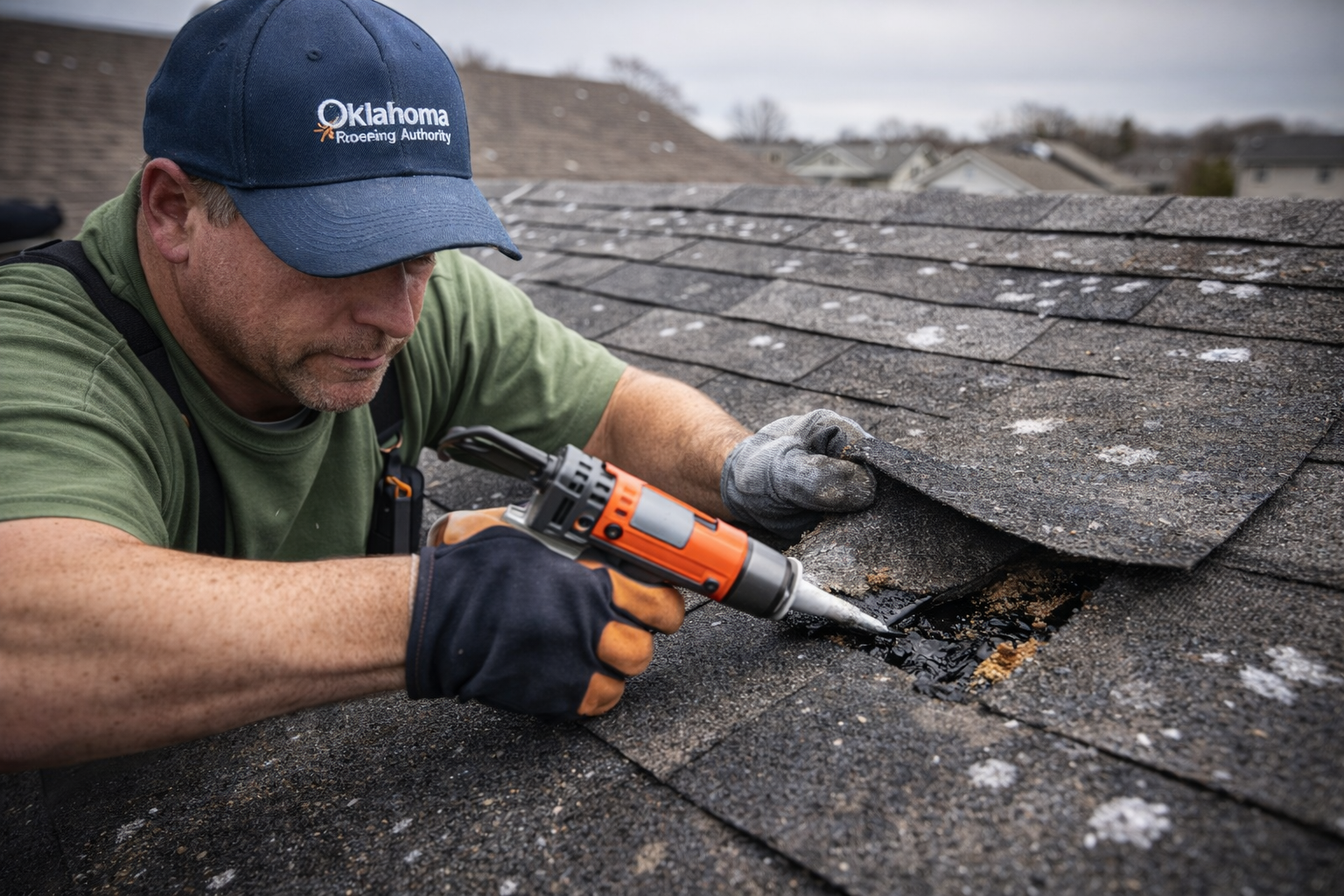
Oklahoma roofs operate under some of the harshest weather conditions in the country. Hailstorms, straight-line winds, extreme summer heat, sudden cold snaps, and intense ultraviolet exposure all accelerate wear on roofing materials. What might be a reliable roof patch in a mild climate often fails much faster in Oklahoma.
When damage appears, homeowners naturally ask:
“Can this be safely patched, or does it need real repair or replacement?”
The honest answer is: sometimes patching makes sense — but only in specific situations. Knowing when a patch is appropriate, when it becomes risky, and how Oklahoma’s climate impacts long-term performance helps protect both your home and your budget.
This guide explains when roof patching works in Oklahoma, when it doesn’t, and how to make informed decisions after storms or aging-related damage.
Why Oklahoma Weather Makes Roof Patching More Challenging
Roof patches rely heavily on adhesives, sealants, and mechanical fasteners. Oklahoma’s climate places constant stress on those materials:
• Hail impacts weaken patched areas and surrounding shingles over repeated storm cycles.
• High summer heat and UV exposure accelerate sealant breakdown and shingle brittleness.
• Freeze-thaw cycles allow moisture to expand beneath patched areas, lifting materials and creating gaps.
• Straight-line winds and gust fronts stress seams and fasteners.
• Rapid temperature swings cause aggressive expansion and contraction of roofing components.
If you’d like deeper context on how climate influences roof performance and lifespan, see our guide on how Oklahoma weather affects residential roofing systems.
Because of these environmental forces, patches in Oklahoma should usually be viewed as either short-term protection or carefully selected permanent repairs — not a universal solution.
When Roof Patching Is Appropriate in Oklahoma
There are legitimate scenarios where patching can be responsible, cost-effective, and safe.
Small, Isolated Shingle Damage
Patching or replacing a small number of shingles can be effective when:
• Damage is limited to a tight area
• Surrounding shingles remain flexible and intact
• No decking or underlayment moisture is present
• Granule loss is minimal and localized
• The roof still has reasonable remaining life
Minor wind lift, localized debris impact, or a small installation defect often falls into this category.
Temporary Protection After Storm Damage
After severe storms, temporary patching may be used to:
• Stop active leaks
• Prevent interior water damage
• Protect insulation and framing
• Stabilize the roof while insurance is reviewed
Temporary measures such as tarping or emergency sealant should always be followed by permanent repair or replacement once conditions allow.
Flashing or Seal Failures (Not Structural Damage)
Localized leaks around components such as:
• Vent pipe boots
• Chimney flashing
• Skylight seals
• Small nail penetrations
can often be repaired successfully if caught early and if surrounding materials remain healthy.
Short-Term Extension on Aging Roofs
In some cases, homeowners may patch an aging roof temporarily to bridge timing gaps related to budgeting, home sale timing, or seasonal scheduling. These patches should be viewed strictly as temporary risk management.
Patch vs Repair vs Replacement Overview

Patch vs Repair vs Replacement Decision Overview: This diagram illustrates when short-term patching is appropriate versus when targeted repairs or full roof replacement typically provide better long-term protection for Oklahoma homes.
Many homeowners eventually need to evaluate whether a localized patch still makes sense or whether broader restoration is the smarter investment. Our detailed guide on roof repair vs replacement in Oklahoma explains how professionals assess damage severity, remaining roof life, and long-term cost efficiency.
When Roof Patching Is NOT Appropriate in Oklahoma
This is where patching often becomes a costly mistake.
Widespread Hail Damage
Hail frequently fractures shingle mats and dislodges granules in ways that may not be visible from the ground. Patching visible spots does not restore the waterproofing integrity of the system.
If hail damage is widespread, patching often leads to:
• Recurring leaks
• Accelerated material failure
• Warranty complications
• Insurance claim challenges
Our hail damage inspection guide for Oklahoma homeowners explains how impact damage affects long-term roof performance.
Multiple Leaks or Systemic Aging
If a roof shows signs such as:
• Curling or brittle shingles
• Widespread granule loss
• Soft decking areas
• Repeated leaks in different locations
• Layers of previous patches
Surface patching rarely solves the underlying problem.
Structural Decking or Moisture Saturation
Once moisture reaches the decking, insulation, or framing, surface patches cannot address hidden deterioration. Trapped moisture often leads to rot and mold — especially during humid Oklahoma summers.
Insurance-Related Storm Loss
If storm damage may qualify for insurance coverage, patching before documentation can complicate claims and valuation. Always document damage before permanent modification.
How Long Do Roof Patches Last in Oklahoma?
Longevity varies widely depending on materials, exposure, and workmanship:
• Emergency patches: weeks to months
• Minor shingle replacements: 1–5 years
• Sealant-only patches: often fail within 1–2 summers
• Aging roof patches: unpredictable lifespan
Heat and UV exposure typically limit durability more than rainfall.
Patch vs Repair vs Replacement Cost Perspective
| Option | Typical Use | Long-Term Risk |
|---|---|---|
| Patch | Emergency or isolated damage | Medium |
| Targeted Repair | Localized system restoration | Low–Medium |
| Full Replacement | Widespread damage or aging | Lowest |
Repeated patching often costs more over time than solving the root issue.
How to Decide What Your Roof Actually Needs
A responsible evaluation considers:
• Roof age and material condition
• Extent and pattern of damage
• Decking and attic moisture evidence
• Previous repair history
• Upcoming seasonal exposure
• Insurance eligibility
This avoids short-term decisions that create long-term costs.
If you’re specifically evaluating hail-related damage, this companion article walks through real-world scenarios: can hail damage be repaired or does an Oklahoma roof need to be replaced?
Frequently Asked Questions
Is roof patching safe during Oklahoma winter?
Cold temperatures reduce adhesive bonding and shingle flexibility. Winter patches are often temporary unless manufacturer temperature requirements are met.
Can homeowners patch their own roof?
DIY patches frequently fail due to improper sealing, incompatible materials, and unsafe installation practices.
Will a patch permanently stop leaks?
Only when damage is truly isolated and surrounding materials remain structurally sound.
Does patching affect insurance claims?
Yes. Repairs made before documentation may impact claim outcomes and coverage decisions.
How quickly should storm damage be addressed?
Active leaks should be stabilized immediately, followed by professional inspection as soon as conditions allow.

Leave a Reply