If you inspect enough roofs across Oklahoma City, Edmond, Norman, Moore, Yukon, Mustang, and Piedmont, you’ll notice a consistent pattern:
The south and west-facing slopes show wear, granule loss, and storm damage earlier than other areas of the roof.
This isn’t coincidence.
In Oklahoma’s climate, roof orientation directly affects heat exposure, wind pressure, hail impact angle, and long-term material performance. Understanding slope-specific aging can help homeowners make smarter inspection, maintenance, and replacement decisions.
The Oklahoma Climate Factor
Oklahoma roofing systems face a unique combination of environmental stressors:
- Extended summer heat above 95°F
- Roof surface temperatures exceeding 150°F
- High UV exposure
- Rapid temperature swings (thermal shock)
- Southwest storm patterns
- Wind-driven hail
- Expansive clay soils
When these factors combine, certain roof planes degrade faster than others.
How Oklahoma Weather Effects our Roofs
1. South and West Slopes Receive Maximum Solar Exposure
South-facing slopes receive the longest duration of sunlight. West-facing slopes absorb the most intense late-afternoon radiant heat.
During Oklahoma summers:
- Roof surfaces routinely reach 150–170°F
- Asphalt oxidation accelerates
- Sealant strips soften and re-harden repeatedly
- Granules loosen earlier
This causes:
- Premature brittleness
- Curling edges
- Loss of flexibility
- Reduced impact resistance
Over time, these slopes age faster than north-facing planes that remain shaded for longer portions of the day.
2. Thermal Shock Is More Aggressive on High-Exposure Slopes
Oklahoma is known for extreme temperature swings.
A roof can go from freezing overnight to warm and sunny by midday. This rapid expansion and contraction cycle is called thermal shock.
South and west slopes:
- Heat rapidly in the morning
- Hold heat longer into the evening
- Experience greater expansion stress
Repeated thermal cycling weakens:
- Shingle adhesive bonds
- Nail holding strength
- Fiberglass mat structure
Thermal shock is one of the most overlooked causes of early shingle failure in Oklahoma.
For deeper material science insight, see our internal guide:
[Internal Link Placeholder – Oklahoma Heat and Roof Lifespan]
3. Prevailing Southwest Winds Increase Uplift Stress
In central Oklahoma, severe storms typically approach from the southwest.
That means:
- West-facing slopes receive direct wind pressure
- Southwest corners experience the highest uplift loads
- Shingles flex repeatedly during gust events
Over time, adhesive strips weaken, especially when combined with heat degradation.
This is why wind damage often starts on west slopes first.
4. Wind-Driven Hail Hits at an Angle
Many Oklahoma hailstorms are not vertical-impact events.
Strong wind pushes hail sideways, meaning:
- West and southwest slopes absorb more direct impact
- Granule displacement is heavier on those slopes
- Microfractures develop sooner
Insurance adjusters frequently focus inspection attention on west-facing planes because of this pattern.
For claim strategy guidance, see:
[Internal Link Placeholder – How to File a Roof Insurance Claim in Oklahoma]
5. Expansive Clay Soil Adds Subtle Structural Stress
Much of central Oklahoma sits on expansive clay soils.
These soils:
- Expand during heavy rainfall
- Contract during dry heat
- Cause subtle structural shifts over time
While this doesn’t directly damage shingles, it can contribute to uneven decking stress that compounds aging on already heat-stressed slopes.
A Unique Oklahoma Roofing Insight
Here’s something rarely discussed nationally:
In Oklahoma, late-afternoon heat exposure on west slopes often coincides with the typical arrival time of severe thunderstorms.
This creates a compounding effect:
- Shingles are at peak temperature
- Adhesive strips are softened
- Wind pressure increases
- Hail impacts brittle, heat-stressed material
This stacking effect accelerates damage more dramatically here than in many northern states.
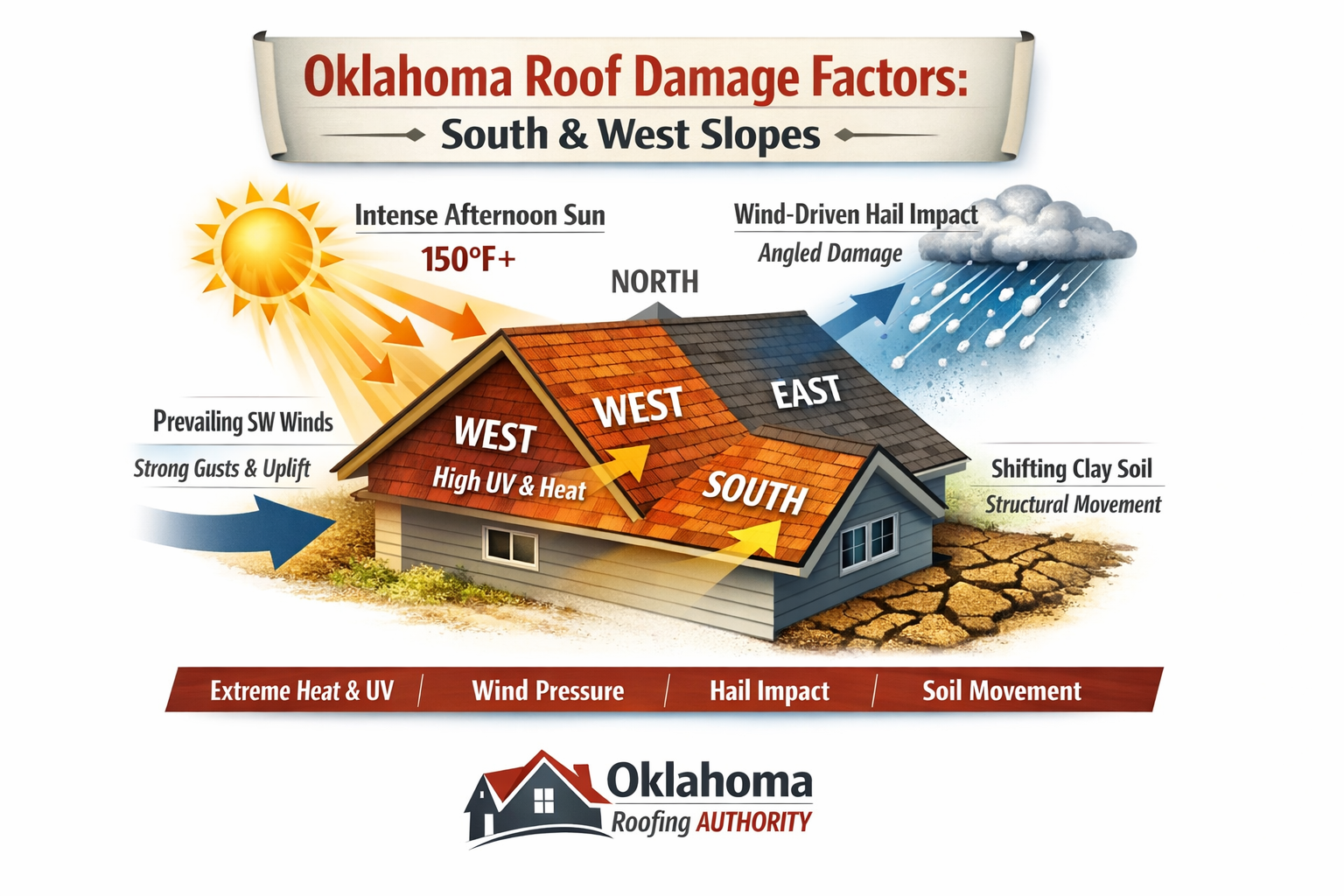
Technical Visualization: Slope Exposure Diagram


This orientation pattern explains why roofs rarely age evenly in Oklahoma.
Inspection Checklist for Oklahoma Homeowners
If your roof is 8–12 years old, check for:
- Granule buildup in gutters (especially from west slope)
- Curling edges on south-facing shingles
- Lifted tabs on southwest corners
- Discoloration differences between slopes
- Sealant failure after summer heat
If one slope looks significantly worse than another, that is normal in Oklahoma — but it may indicate approaching system failure.
Should You Replace Only One Slope?
Sometimes partial replacement is possible.
However, factors to consider include:
- Shingle matching availability
- Insurance scope approval
- Code requirements
- Overall system age
- Ventilation condition
Oklahoma weather often causes uneven damage, but full-system evaluation is critical before deciding.
Frequently Asked Questions
Why does my north slope look newer than my south slope?
North slopes receive less direct sunlight and stay cooler. UV exposure and heat aging are significantly reduced, which slows asphalt oxidation.
Can insurance deny a claim if only one slope is damaged?
Insurance carriers evaluate functional damage. If hail or wind damage is slope-specific but meets replacement criteria, coverage may still apply. Documentation and proper inspection matter.
Does upgrading to impact-resistant shingles help on west slopes?
Yes. Class 3 or Class 4 impact-resistant shingles perform better against wind-driven hail, which is common in Oklahoma storms.
Does attic ventilation affect slope aging?
Proper ventilation reduces heat buildup and slows sealant fatigue. Poor ventilation accelerates aging, especially on high-exposure slopes.
How often should Oklahoma roofs be inspected?
At minimum:
- After major hailstorms
- After severe wind events
- Annually once the roof passes 7–8 years of age
Final Takeaway for Oklahoma Homeowners
Roof orientation matters in Oklahoma.
Because of our:
- Heat intensity
- Wind patterns
- Hail angles
- Temperature swings
South and west slopes almost always age faster.
If your roof appears uneven in wear, that is not unusual — but it may signal early failure on those planes.
Understanding slope-specific stress helps homeowners:
- Plan proactive maintenance
- Document storm damage correctly
- Choose better materials
- Avoid surprise system failure
Related Oklahoma Roofing Guides
Understanding how slope direction affects your roof is just one piece of the bigger picture. Explore these in-depth Oklahoma Roofing Authority resources:
- [How to File a Roof Insurance Claim in Oklahoma]
Step-by-step guidance for documenting wind and hail damage. - [Oklahoma Heat and Roof Lifespan Guide]
How extreme summer temperatures shorten asphalt shingle life in Oklahoma. - [When Should You Replace vs Repair a Roof in After Hail?]
Practical guidance based on real regional conditions.

Leave a Reply