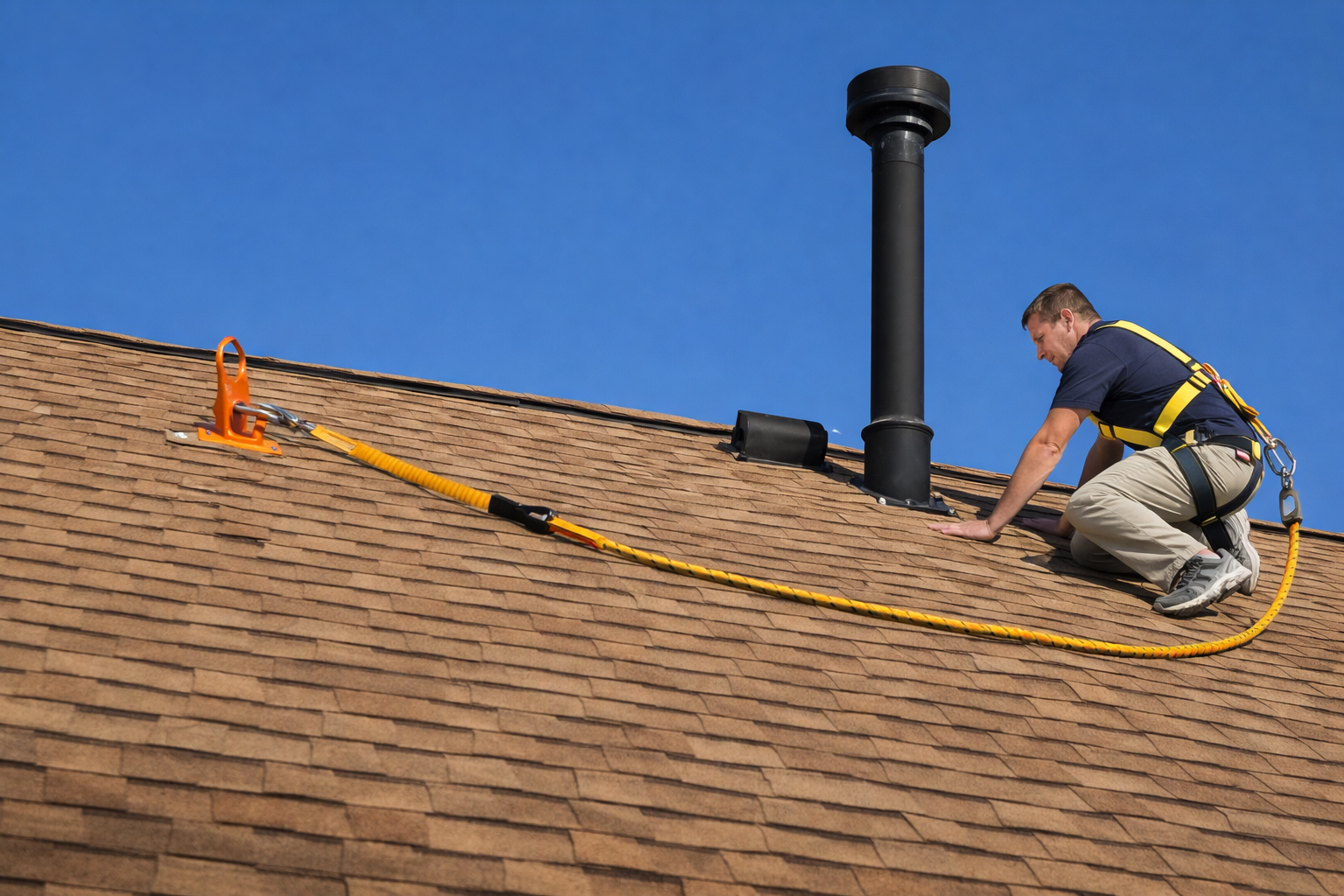
After a severe storm in Oklahoma, many homeowners ask the same question:
“Should I get up there and check my roof myself?”
With Oklahoma’s combination of large hail, 60–80 mph straight-line winds, and rapid temperature swings, climbing onto your roof immediately after a storm is often more dangerous — and more damaging — than people realize.
Before grabbing a ladder, it’s important to understand how Oklahoma storm systems affect roofing materials and structural stability. For a full breakdown of how weather impacts shingles and roofing systems, see our guide to [Oklahoma storm, wind and hail roof damage].
Short Answer: Usually No
In most post-storm situations in Oklahoma, it is not safe to walk on your roof.
Storm conditions frequently leave shingles:
- Wet or slick from rain and granule displacement
- Partially lifted from wind uplift
- Structurally weakened from hail impact
- Loosened around flashing, ridge caps, and valleys
Even if the roof looks fine from the ground, hidden damage can make footing unstable.
Why Oklahoma Storms Make Roofs Especially Risky
Oklahoma roofing systems face more extreme stress than many other regions.
High Wind Uplift
Central Oklahoma regularly experiences straight-line wind events exceeding 70 mph. Wind pressure can:
- Break adhesive seals between shingles
- Lift tabs without fully removing them
- Loosen ridge caps
- Shift flashing around penetrations
When you step on a partially lifted shingle, you can permanently break its seal and shorten its service life.
Hail Impact Weakens Shingles Internally
Hail damage is often invisible from ground level.
Impact can:
- Fracture fiberglass matting
- Bruise asphalt layers
- Displace protective granules
Walking on hail-bruised shingles can cause cracking that wasn’t immediately visible after the storm. This may complicate insurance documentation later.
If you are considering filing a claim, review our Oklahoma-specific guide on How to initiate a roof insurance claim before disturbing the roof surface.
Granule Loss Creates Slippery Surfaces
After Oklahoma hailstorms, granules frequently accumulate in gutters and across roof surfaces.
Loose granules reduce traction significantly, especially on slopes over a 5/12 pitch. What feels stable at first step can quickly become hazardous.
Injury Risk Is Higher Than Most Homeowners Expect
Roof falls remain one of the most common home maintenance injuries nationwide.
Post-storm risk factors in Oklahoma include:
- Soft decking from water intrusion
- Detached ridge vents
- Bent flashing edges
- Exposed fasteners
- Unstable ladder placement on saturated soil
Even a one-story fall can cause serious injury. Two-story homes in suburban Oklahoma neighborhoods present even greater risk.
Safer Ways to Check for Storm Damage
Most homeowners do not need to physically walk the roof to determine whether inspection is necessary.
Instead, follow these safer alternatives:
1. Inspect the Yard
Look for:
- Shingle fragments
- Excessive granules in downspouts
- Dented vents or soft metals
2. Check the Attic
Look for:
- Moisture or damp insulation
- Daylight through decking
- Active leaks
3. Inspect From the Ground
Use binoculars to look for:
- Missing shingles
- Lifted ridge caps
- Flashing displacement
For a detailed step-by-step guide, read our article on How to inspect your roof from the ground .
Does Walking on the Roof Affect Insurance?
It can.
Insurance adjusters look for:
- Consistent hail impact patterns
- Clear wind uplift evidence
- Undisturbed shingle surfaces
Heavy foot traffic may:
- Crack already bruised shingles
- Disturb impact markings
- Break seal strips
Preserving the roof’s post-storm condition is important if a claim may be filed.
Roofing Education for Oklahoma Homeowners
Understanding roofing systems in Oklahoma requires knowledge of:
- Wind uplift zones
- Hail impact ratings
- Installation standards
- Documentation best practices
For broader guidance, homeowner resources, and educational content specific to Oklahoma conditions, visit our Oklahoma roofing education and resource center
Frequently Asked Questions
Can I see hail damage from the ground?
You may see dented vents or gutters, but shingle bruising typically requires close inspection.
Does walking on shingles damage them?
Yes. Asphalt shingles are designed to shed water, not support concentrated foot pressure.
Is it safe to climb up just for a quick look?
Most roof injuries occur during quick checks without full safety precautions.
Will insurance require me to climb up?
No. Insurance companies expect documentation, not homeowner roof access.
What if I already walked on the roof?
Avoid further traffic, document the condition immediately, and schedule a professional evaluation if damage is suspected.
Bottom Line for Oklahoma Homeowners
Oklahoma storms are intense, and their effects on roofing systems are not always visible.
Walking on your roof after a storm can:
- Increase injury risk
- Worsen hidden damage
- Complicate insurance claims
- Shorten roof lifespan
In most cases, staying off the roof is the safest and smartest decision.

Leave a Reply